
Research and advocacy for Australia’s demographic future
Pronatalism Australia is an Australian not-for-profit organisation focused on fertility decline, demographic sustainability, and the policies and cultural conditions that support family formation. We conduct research, contribute to public discussion, and advocate for a future in which Australians who want children are better supported in having them.
Non-partisan · Evidence-based · Future-focused
Who we are
Pronatalism Australia is a not-for-profit organisation dedicated to understanding and addressing Australia’s declining fertility rate. We engage in research, writing, public discussion, and advocacy around fertility decline, demographic sustainability, family formation, and long-term social continuity.
Our approach is thoughtful, non-partisan, and evidence-oriented. We believe that demographic change is one of the defining challenges of the 21st century, and that addressing it requires honest conversation, structural reform, and a renewed commitment to the conditions that allow families to form and flourish.
Why it matters
1.5
Australia’s total fertility rate, well below the 2.1 replacement level
0.52
fewer children per woman
Australia’s fertility rate fell from 2.00 in 2008 to 1.48 in 2024 — a decline of about 26%.
Australia’s population is aging, its birth rate has been below replacement for over a decade, and the gap between the families people want and the families they have continues to grow. These are not abstract trends. They shape the future of healthcare, the economy, social cohesion, and the kind of society the next generation will inherit. Strong societies renew themselves across generations. Supporting people who want to have children is one of the most important things we can do.
WHAT FOLLOWS
What fertility decline sets in motion
Below-replacement fertility does not announce itself. Its effects accumulate over decades, and they reach a good deal further than the birth statistics suggest.
An older population
Each smaller cohort follows a larger one, and the median age rises. Fewer people of working age support each retiree at exactly the moment demand for care is growing.
A narrower fiscal base
Pensions, health care and aged care are funded largely out of the earnings of working-age Australians. A shrinking base of taxpayers has to carry costs that keep expanding.
Thinner family networks
Most care in Australia is given informally, by adult children and extended kin. As families grow smaller that web thins, and what once happened within families has to be paid for.
Migration only buys time
Skilled migration strengthens the workforce for a period, and it remains valuable. Migrants also age, and the countries they come from are following the same fertility path, so the arithmetic returns.
Communities that thin out
A hospital, a water system or a rail line costs much the same whether it serves ten thousand people or two. When regional populations fall, services are withdrawn, which prompts more people to leave.
A weaker chain of continuity
Culture is handed on rather than inherited automatically, and most of the handing on happens within families. A society that struggles to renew itself loses more than just workers and taxpayers.
None of this is fixed. Fertility responds to the conditions people face, and those conditions are within our power to change. Understanding how, and saying so publicly, is the work we have set ourselves.
RESEARCH & ADVOCACY
Areas of focus
Our work spans research, writing, and public engagement across the key dimensions of Australia’s demographic challenge.
Fertility Decline
Understanding the drivers and dimensions of Australia’s falling birth rate, from structural barriers to cultural shifts in how we think about family formation.
Housing & Family Formation
Investigating the relationship between housing affordability, homeownership, and the capacity of young Australians to start and grow families.
Demographic Sustainability
Exploring what it means for a society to sustain itself across generations, including the economic, fiscal, and social consequences of prolonged population decline.
Intergenerational Continuity
Examining how societies transmit values, knowledge, and institutions across generations, and what is lost when the chain of continuity weakens.
Family-Friendly Institutions
Advocating for workplaces, childcare systems, housing markets, and public policies that are designed around the reality of raising children.
Cultural Attitudes
Exploring how cultural narratives, media, and social norms shape attitudes toward parenthood, and how a more family-affirming culture can emerge without coercion.
COMING SOON
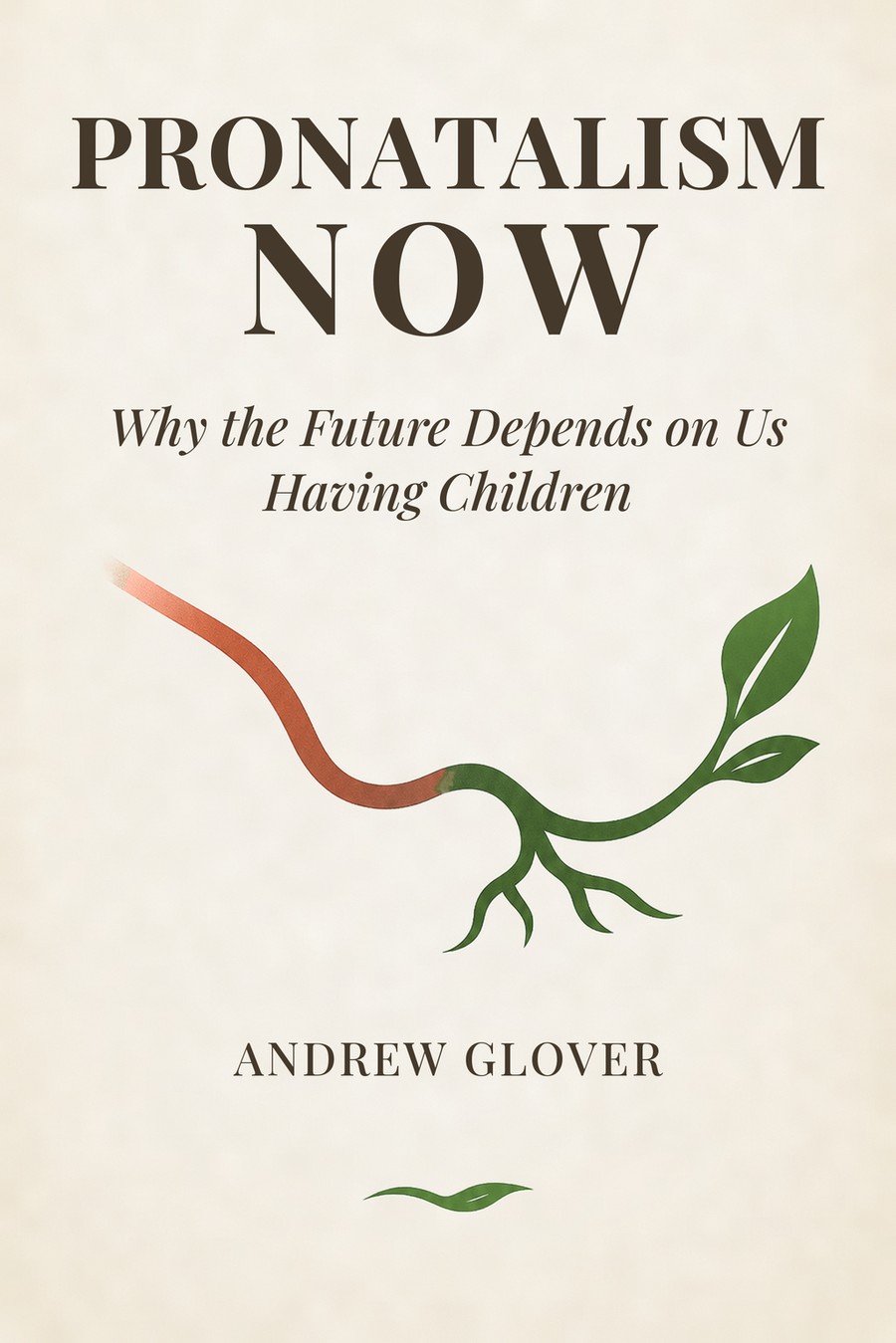
Pronatalism Now
Why the Future Depends on Us Having Children
A broad, evidence-based exploration of fertility decline, demographic change, and the future of family formation in developed societies. The book reframes pronatalism as demographic stewardship and argues that rebuilding the conditions for family life is one of the great civic challenges of our time.
Written by Andrew Glover, founder of Pronatalism Australia.
Contact

Dr Andrew Glover
Founder, Pronatalism Australia
Andrew is a sociologist and researcher based in Wollongong, with a PhD from the Institute for Sustainable Futures at the University of Technology Sydney. His research spans sustainability, social change, and public policy. His current focus is how Australia can reverse its fertility decline and renew the conditions for family formation.